







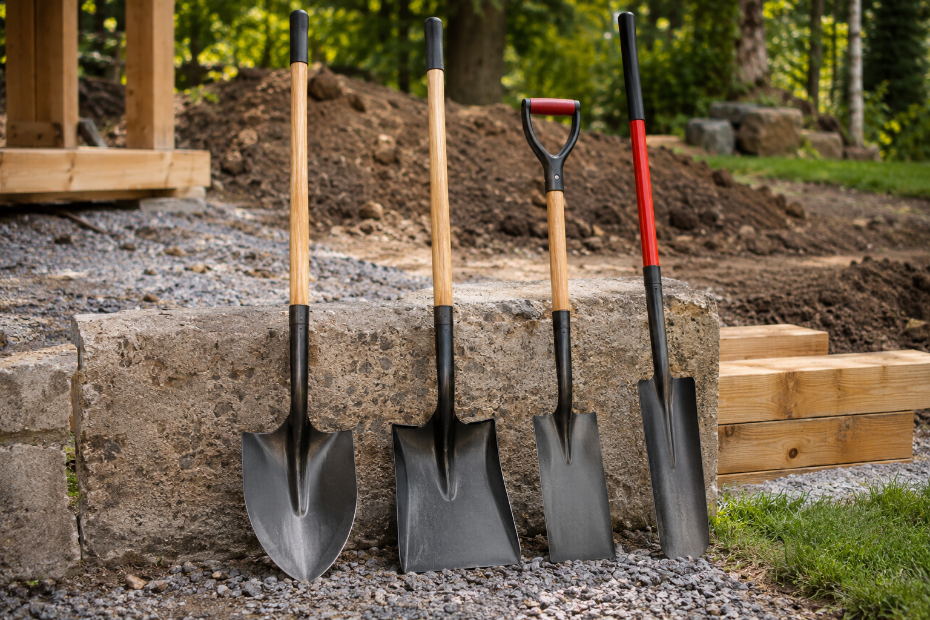
Whether you're digging foundations, installing underground cables, preparing a garden, or moving construction materials, choosing the right shovel can make a significant difference in efficiency, comfort, and overall performance.
Although shovels may look similar, different blade shapes, handle designs, and construction features serve different purposes. A shovel designed for cutting into compacted soil may not be the best option for transferring gravel, while a general-purpose digging shovel may be too wide for narrow trenching work.
Understanding the different types of shovels and their uses helps contractors, landscapers, utility installers, and homeowners select the right tool for each application.
In this guide, we'll explain the most common shovel types, compare their advantages, and help you choose the best shovel for digging, landscaping, trenching, and construction projects.
1. Round Point Shovels: Best for General Digging
A round point shovel is one of the most versatile digging tools available. Its pointed blade is designed to penetrate soil, making it suitable for a wide variety of excavation and landscaping tasks.
The slightly curved blade helps lift and remove soil after breaking into the ground.
Common applications:
-
Digging holes for posts, trees, and shrubs
-
Excavating soil during landscaping projects
-
Preparing garden beds
-
Removing compacted or moderately hard soil
-
General construction and property maintenance
Why choose a round point shovel?
The pointed blade concentrates force at the tip, helping the shovel enter the ground more easily than a flat-edged shovel. This makes it particularly useful when working with undisturbed soil.
For contractors and homeowners looking for a versatile, all-purpose digging tool, a round point shovel is often the most practical starting point.
Recommended tool: Explore K-Pro Round Point Shovels
2. Square Point Shovels: Best for Moving Loose Materials
Unlike round point shovels, square point shovels have a relatively flat cutting edge. This design makes them particularly effective for scooping, lifting, and transferring loose materials.
While they can perform some digging tasks, square point shovels are generally better suited to moving materials that have already been loosened or excavated.
Common applications:
-
Moving sand, gravel, and crushed stone
-
Transferring loose soil and mulch
-
Cleaning construction surfaces
-
Loading wheelbarrows
-
Removing loose debris
-
Levelling and scraping material from flat surfaces
Why choose a square point shovel?
The flat edge allows the blade to sit closer to the ground, making it easier to collect loose materials from relatively level surfaces.
For construction crews, landscapers, and maintenance professionals who regularly transfer bulk materials, a square point shovel can be more efficient than a traditional round point model.
Recommended tool: Explore K-Pro Square Point Shovels
3. Garden Spades: Best for Precision Digging and Landscaping
A garden spade is designed for controlled digging, soil preparation, edging, and transplanting.
Traditional garden spades feature relatively straight, flat blades. However, spade designs vary, and some pointed models are intended for more demanding digging applications.
Compared with broad general-purpose shovels, garden spades often provide greater control when working in confined spaces or preparing carefully defined planting areas.
Common applications:
-
Creating clean garden edges
-
Cutting through turf and sod
-
Transplanting plants and shrubs
-
Preparing flower beds
-
Digging controlled planting holes
-
Working around established landscaping
Why choose a garden spade?
A garden spade is particularly useful when accuracy and control matter more than moving large quantities of material.
Short-handle models with D-shaped grips can provide good hand control during detailed landscaping and digging tasks.
Recommended tool: K-Pro D-Handle Garden Spade
4. Trenching Shovels and Drain Spades: Best for Narrow Excavations
Trenching shovels and drain spades are specialized digging tools designed for narrow excavations.
Their elongated, relatively narrow blades allow users to dig confined channels while minimizing unnecessary disturbance to the surrounding ground.
These tools are particularly useful for utility installation, drainage work, and landscaping projects.
Common applications:
-
Digging narrow drainage channels
-
Installing irrigation pipes
-
Preparing trenches for underground cables
-
Working around existing landscaping
-
Excavating near fences and restricted areas
-
Cleaning and shaping narrow trenches
Why choose a trenching shovel or drain spade?
Using a standard wide shovel for a narrow trench may require removing more soil than necessary. A narrow-blade tool allows more targeted excavation and can help reduce the amount of backfilling required.
For telecommunications, electrical, and utility contractors, these tools can be valuable when preparing or maintaining underground installations.
Before excavation, always verify the location of buried utilities and follow applicable local requirements.
Recommended tool: Garant Pro Series Drain Spade Shovel
5. Scoop Shovels: Best for Handling Bulk Materials
Scoop shovels are designed primarily for moving loose materials rather than breaking through hard soil.
They typically feature wider, deeper blades that can carry larger volumes of relatively lightweight material.
Common applications:
-
Moving mulch and compost
-
Handling grain and other bulk materials
-
Transferring loose debris
-
Cleaning work areas
-
Loading lightweight landscaping materials
Why choose a scoop shovel?
The wider blade increases carrying capacity, making scoop shovels useful for repetitive material-handling tasks.
However, larger loads can become heavy quickly when handling dense materials such as wet soil or gravel. Choosing an appropriate load size is important for safe and efficient work.
Recommended collection: Explore Garant Construction and Gardening Tools
6. Long-Handle vs. D-Handle Shovels: Which Is Better?
Choosing the right blade is important, but handle design also affects comfort, leverage, and control.
Two common shovel configurations are long straight handles and shorter D-handles.
Long-Handle Shovels
Long-handle shovels are commonly used for general excavation and outdoor construction.
Advantages:
-
Provide additional reach
-
Allow more flexibility in hand positioning
-
Work well for repetitive digging
-
Can reduce the need to bend excessively when appropriately sized
They are often preferred for general-purpose digging, particularly when working in open spaces.
D-Handle Shovels
D-handle shovels feature a shorter shaft with a D-shaped grip at the top.
Advantages:
-
Provide controlled hand positioning
-
Help with precise digging and lifting
-
Are convenient in restricted spaces
-
Can be useful for edging and landscaping work
Neither design is universally better. The right choice depends on the task, working environment, tool dimensions, and user's preference.
7. Comparison: Which Type of Shovel Should You Use?
The following table provides a quick reference for selecting the right digging tool.
| Shovel Type | Best Application | Key Advantage |
|---|---|---|
| Round Point Shovel | General digging and soil excavation | Pointed blade penetrates soil |
| Square Point Shovel | Moving gravel, sand, and loose materials | Flat edge improves scooping |
| Garden Spade | Edging, planting, and precision digging | Greater cutting control |
| Trenching Shovel | Narrow utility and drainage trenches | Narrow excavation profile |
| Drain Spade | Drainage, irrigation, and confined digging | Long, narrow blade |
| Scoop Shovel | Bulk material handling | Wide blade carries more material |
Quick recommendation: For general digging, start with a round point shovel. For moving loose material, choose a square point shovel. For detailed landscaping, consider a garden spade. For narrow trenches and underground utility work, a specialized drain spade or trenching shovel is usually more appropriate.
8. How to Choose the Best Shovel for Your Project
Beyond blade shape, several factors influence how well a shovel performs.
Consider the Soil Conditions
Different ground conditions place different demands on digging tools.
-
Loose or sandy soil: Round point shovels work well for excavation, while square point shovels are useful for transferring loosened material.
-
Clay soil: A strong, sharp digging blade can help penetrate dense, cohesive ground.
-
Rocky ground: Heavy-duty digging tools may be necessary, sometimes in combination with a digging bar or pick.
-
Compacted soil: A pointed shovel can help break into the surface, although extremely hard ground may require additional tools.
A shovel suitable for soft garden soil may struggle under demanding construction conditions.
Evaluate Blade Construction
For frequent or heavy-duty use, consider the blade's material, thickness, shape, and connection to the handle.
Steel blades are widely used in professional digging applications because they provide strength and durability.
Forged steel blades may offer advantages for demanding tasks, depending on the specific manufacturing process and design.
A reinforced blade-to-handle connection can also be valuable when the tool is subjected to repeated digging forces.
Choose the Right Handle Material
Common shovel handle materials include wood, fibreglass, and steel.
Wood handles provide a traditional feel and can be comfortable to use, but require care to prevent moisture damage.
Fibreglass handles resist rot and can offer good durability in demanding environments. However, not every fibreglass handle has the same strength or construction.
Steel handles provide a robust alternative, although their weight and comfort characteristics vary by design.
When selecting a shovel, consider the entire tool rather than choosing based on handle material alone.
Consider Comfort and Ergonomics
A shovel should feel balanced and appropriate for the user's height and intended task.
Handle length, grip shape, blade size, and overall weight can affect fatigue during extended work.
For repetitive digging, proper technique is just as important as tool selection. Avoid excessive loads, maintain stable footing, and use the legs rather than relying entirely on the lower back when lifting.
9. Choosing Shovels for Canadian Construction and Landscaping Conditions
Canadian contractors and landscapers encounter a wide range of ground conditions throughout the year.
Depending on the region and season, soil may be sandy, clay-heavy, rocky, saturated, compacted, or frozen.
Selecting the correct shovel for these conditions can improve work efficiency and reduce unnecessary tool wear.
For example, landscaping crews working with loose topsoil may benefit from square point shovels, while contractors performing general excavations may rely more heavily on round point models.
Utility installers preparing narrow trenches may require specialized drain spades.
Frozen or exceptionally compacted ground can be difficult to excavate using a shovel alone. Breaking or loosening the ground with suitable equipment may be necessary before removing the soil.
For professionals, the most effective solution is often to keep several complementary digging tools available rather than relying on one shovel for every application.
10. Proper Shovel Maintenance for Longer Service Life
Even a high-quality shovel requires basic maintenance to maintain performance.
Regular care can help reduce corrosion, prevent damage, and extend service life.
Recommended maintenance practices:
-
Clean soil, mud, and debris from the blade after use.
-
Dry metal surfaces before storing the shovel.
-
Inspect the handle for cracks, looseness, or other damage.
-
Maintain a suitable cutting edge on digging blades when appropriate.
-
Store shovels in a dry, protected location.
-
Avoid using a shovel as a pry bar unless specifically designed for that purpose.
For wooden handles, inspect for splinters and signs of deterioration. Fibreglass handles should also be checked for cracks and damaged fibres.
A damaged or loose handle should be repaired or replaced before the tool is used again.
Frequently Asked Questions About Shovels
What is the best type of shovel for digging?
A round point shovel is generally the best all-purpose option for digging soil, creating planting holes, and performing common excavation tasks. Its pointed blade helps penetrate the ground more effectively than a square point shovel.
What is the difference between a round point and square point shovel?
A round point shovel has a pointed blade primarily intended for digging into soil. A square point shovel features a flatter cutting edge and is generally better for lifting, scooping, and transferring loose materials such as gravel, sand, and mulch.
What shovel is best for hard clay soil?
A sturdy round point shovel with a sharp steel blade is a practical starting point for digging clay soil. Very dense or dry clay may require additional loosening with a digging bar or pick.
What is the best shovel for digging trenches?
A specialized trenching shovel or drain spade is usually better for narrow trenches than a wide general-purpose shovel. The narrower blade allows users to excavate more precisely for irrigation, drainage, or underground utility installation.
Is a spade better than a shovel?
Neither is universally better. A traditional garden spade is useful for precise cutting, edging, and controlled digging, while shovels are available in designs optimized for general digging or moving materials.
What shovel is best for construction work?
The best construction shovel depends on the job. Round point shovels are useful for excavation, square point shovels are effective for transferring loose materials, and specialized drain spades are valuable for narrow trenching work.
Are fibreglass shovel handles better than wood?
Fibreglass handles resist rot and can be durable under demanding conditions, while wood handles offer a traditional feel and may be easier to replace. Performance depends on handle construction, tool quality, and intended use.
Find the Right Shovel at Canada Cable Tools
Choosing the right shovel starts with understanding the job, ground conditions, and tool features that matter most.
From general excavation and landscaping to drainage work and underground cable installation, using the appropriate digging tool can improve efficiency and help produce more accurate results.
At Canada Cable Tools (CCT), customers can explore a range of construction and gardening tools, including K-Pro round point shovels, square point shovels, garden spades, and specialized digging tools from Garant.
Whether you're a professional contractor, landscaper, utility installer, or homeowner preparing for your next project, selecting a shovel suited to the application is an important part of getting the job done properly.
Explore our available products:
Find the right tools for your next project at Canada Cable Tools.